
Hindu Kush, Landraces, feminized Seeds
Hindu Kush originates from the Hindu Kush high mountains in Central Asia. Specifically, this region covers a major part of Afghanistan and extends into Pakistan. Initially, this 100% Indica grew at altitudes of about 2000 meters near the Shibar pass. Therefore, the plant naturally adapted to a harsher climate over time.
Furthermore, breeders selected this strain for quality and stability over numerous generations. Consequently, they successfully preserved the original landrace genetics. Today, Hindu Kush produces highly consistent plants. Therefore, it represents a perfect variety for uniform indoor grows cultivated straight from seed.
The aroma and the taste of the Hindu Kush are characterized as earthy and spicy. In fact, the flavor profile is similar to traditional dark hashish.
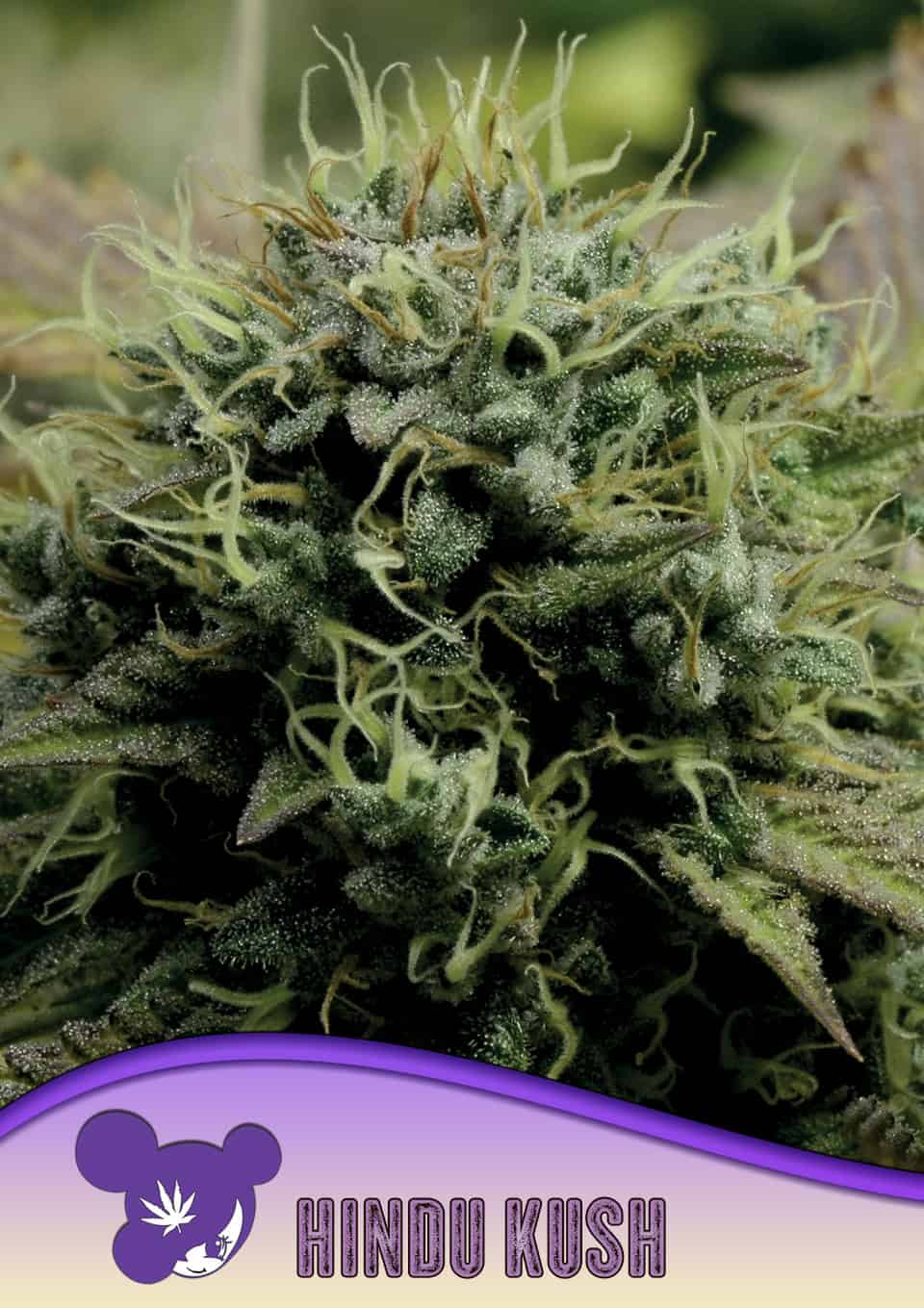
Physiologically, the strain is associated with physical and mental relaxation. In addition, the buds are dense and sticky due to the resin coverage, displaying a light green color with orange hairs. Analytical measurements indicate a THC content of approximately 24%. Therefore, Hindu Kush is characterized by typical Indica attributes.
The strain delivers strong physical effects and significant relaxation. Consequently, these properties historically define its traditional use.
Growing Hindu Kush
Generally, Hindu Kush grows quite stocky and bushy. Because of this structure, growers can cultivate it exceptionally well indoors in limited spaces. Depending on the phenotype, Hindu Kush requires a short flowering period of 7 to 9 weeks. Alternatively, outdoor growers can harvest the plants from late September to early October.
Because of their bushy growth, you can partially remove the huge leaves during indoor grows. Consequently, sufficient light reaches the bottom of the plant.
Yields and Hash Production
Indoors, Hindu Kush delivers 500 to 550 grams of very potent, high-quality weed per square meter. Meanwhile, outdoor and greenhouse cultivation produces impressive crops of 500 to 550 grams per plant. Furthermore, this variety exhibits high resin production. Therefore, it is historically associated with traditional hashish production in its native region.
The plants of Hindu Kush naturally possess a high stress resistance. Furthermore, they are robust during the growth cycle. Therefore, the plants can develop large, resinous buds under standard cultivation conditions.
Therapeutic Context
In botanical and medical discussions, this strain is studied for its specific properties. Consequently, research and anecdotal reports note its application in various contexts:
- Analgesic Properties: It is studied for its pain-relieving characteristics.
- Sedative Effects: It provides strong relaxing effects.
- Cannabinoid Profile: It possesses measurable CBD levels, which are researched in relation to physical spasms.

Michael (verified owner) –
good quality, fast sprouting
Steven Klückmann (verified owner) –
Robert (verified owner) –
Love your landraces programm!
Kush is in the air 🙂
Christian (verified owner) –
I like the stoner effect
Andy Meininger (verified owner) –
Fast and easy 👍