
A practical March checklist to ensure your outdoor grow thrives from day one.
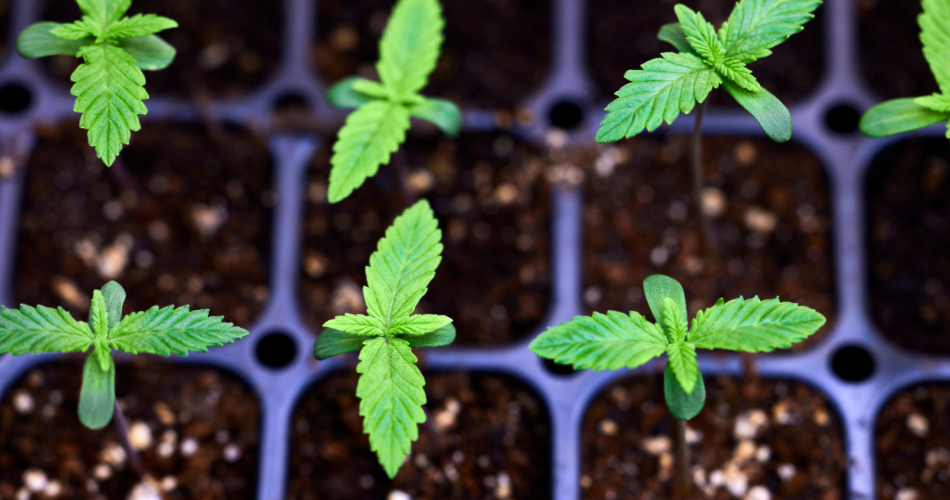
In March is the official beginning of planning and preparation for the outdoor season in the Northern Hemisphere. Since cannabis plants require consistently warm temperatures between approximately 18 and 25 °C for healthy vegetative growth and later stable flower development, and are generally sensitive to cold, the focus in March is primarily on indoor preparations and soil care outdoors.
Temperatures below 10 °C significantly slow growth, and frost leads to severe damage or plant death.
Indoor Start: Seed Germination
- Cannabis seeds should be germinated indoors in March or April to give the plants a growth advantage for the outdoor season.
- Germination can take place for example by using the paper towel method, in which the seeds are placed between moist but not dripping wet towels at around 22–25 °C. It is important to avoid waterlogging, as oxygen deficiency during the germination stage can quickly lead to rot. As soon as the taproot becomes visible, the seed should be carefully placed into the prepared substrate.
Lighting
Since the days in March are still relatively short and light intensity is low, seedlings require additional artificial lighting indoors. LED lights with a higher blue spectrum are particularly suitable, as this wavelength range promotes compact and stable vegetative growth.
For photoperiod and autoflowering plants, 18 hours of light and 6 hours of darkness per day are optimal. A lighting duration of up to 20 or 24 hours is possible, but in practice usually offers no significant advantage. Insufficient light or excessive distance from the light source leads to so-called “stretching” (etiolation), in which long, thin, and unstable stems develop.
Temperature and Air Movement
The ideal germination temperature is around 22–25 °C. After germination, 18–22 °C is sufficient. A gentle airflow, for example from a small fan, mechanically strengthens the stems and promotes more stable tissue development.
Outdoor Site Selection and Planning
- Sunlight: The location should receive at least 6–8 hours of direct sunlight per day. A southern orientation is ideal. Morning sun is particularly beneficial, as it allows dew to dry quickly and thereby reduces the risk of fungal diseases.
- Allelopathic Plants: Cannabis plants should not be placed in close proximity to strongly competitive or potentially allelopathic plants. The walnut tree is particularly well known for releasing juglone through its roots and fallen leaves, a compound that can inhibit the growth of sensitive plants. It is generally advisable to avoid large trees and aggressively spreading plants near your cannabis plants, as root competition, shading, and nutrient depletion are often problematic.
- Wind and Protection: The site should be protected from strong winds while still allowing good air circulation. Adequate ventilation reduces the risk of mold, especially during the later flowering phase.
- Transplanting Time: Young plants should only be permanently placed outdoors once there is no longer any risk of frost. In Central Europe, this is usually not until after the Ice Saints in mid-May. In addition, soil temperatures should be consistently above approximately 12 °C.
Soil Preparation: Cannabis Plants in the Ground:
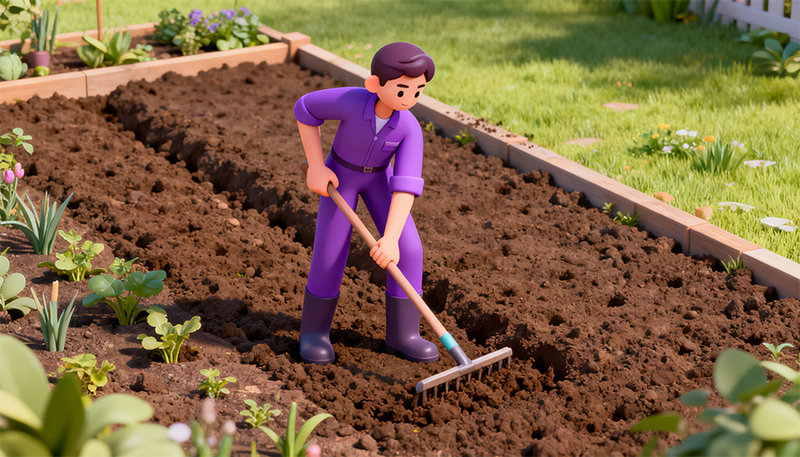
March is ideal for preparing outdoor soil, as organic materials require time to be decomposed by microorganisms and converted into plant-available nutrients.
Step-by-Step Procedure for a Small Area:
- First, the area should be completely cleared of weeds. As much of the root system as possible should be removed to prevent regrowth. Stones and coarse root residues should also be removed.
- Next, the soil should be loosened to a depth of approximately 30–40 cm. A spade or digging fork is suitable for this task. The goal is to reduce soil compaction, improve aeration, and facilitate root growth.
- Soil Improvement: Heavy, clay-rich, and overly wet soils can be improved by mixing in coarse sand or perlite at a proportion of about 10%. This increases drainage and reduces waterlogging. Expanded clay is more suitable for container cultivation and is only of limited use in open ground. Very sandy soils particularly benefit from organic matter, as it improves water and nutrient retention.
Organic Amendments:
Approximately 10–20 liters of mature compost per square meter can be incorporated into the soil. Worm humus can be added as a supplement, as it promotes microbial activity. Organic fertilizers can already be worked into the soil in March so that they are partially decomposed by the time of planting in May. Early incorporation allows for more stable nutrient availability.
Raised Bed as an Alternative:
Instead of planting directly into native soil, a raised bed can also be used in May. A raised bed warms up more quickly in spring, offers better drainage, and allows greater control over the substrate composition. This can simplify maintenance and contribute to stable yields when nutrient supply is optimal.
Checking the pH Value:
The soil pH should be tested, as it significantly influences nutrient uptake. For cannabis, the optimal soil range is between approximately 6.0 and 7.0. If the soil is too acidic, garden lime can be applied in moderation. A balanced ratio of the primary nutrients nitrogen (N), phosphorus (P), and potassium (K) is essential, although in organic cultivation the activity of soil life plays a central role.
Selecting Genetics:
For cooler regions, resilient and mold-resistant varieties like Chimera Cut, Frozen Black Cherry®, Dankberry®, Epic Buzz®, Sticky Boof are recommended. Indica-dominant lines have a shorter flowering period. Autoflowering genetics can also be suitable, as they flower independently of day length and can often be harvested earlier.
Young plants should only be planted outdoors once there is no longer any risk of frost, which in Central Europe is usually after the Ice Saints in May.
Tip for a Strong Start:
If you are already germinating in March, you should ensure a germination temperature of 22–25 °C. Sufficient light intensity from the cotyledon stage onward prevents stretching. A light fan strengthens the stems mechanically.
Overfertilization during the seedling stage must be strictly avoided, as young roots are sensitive to high salt concentrations.
Happy growing for the coming outdoor season!